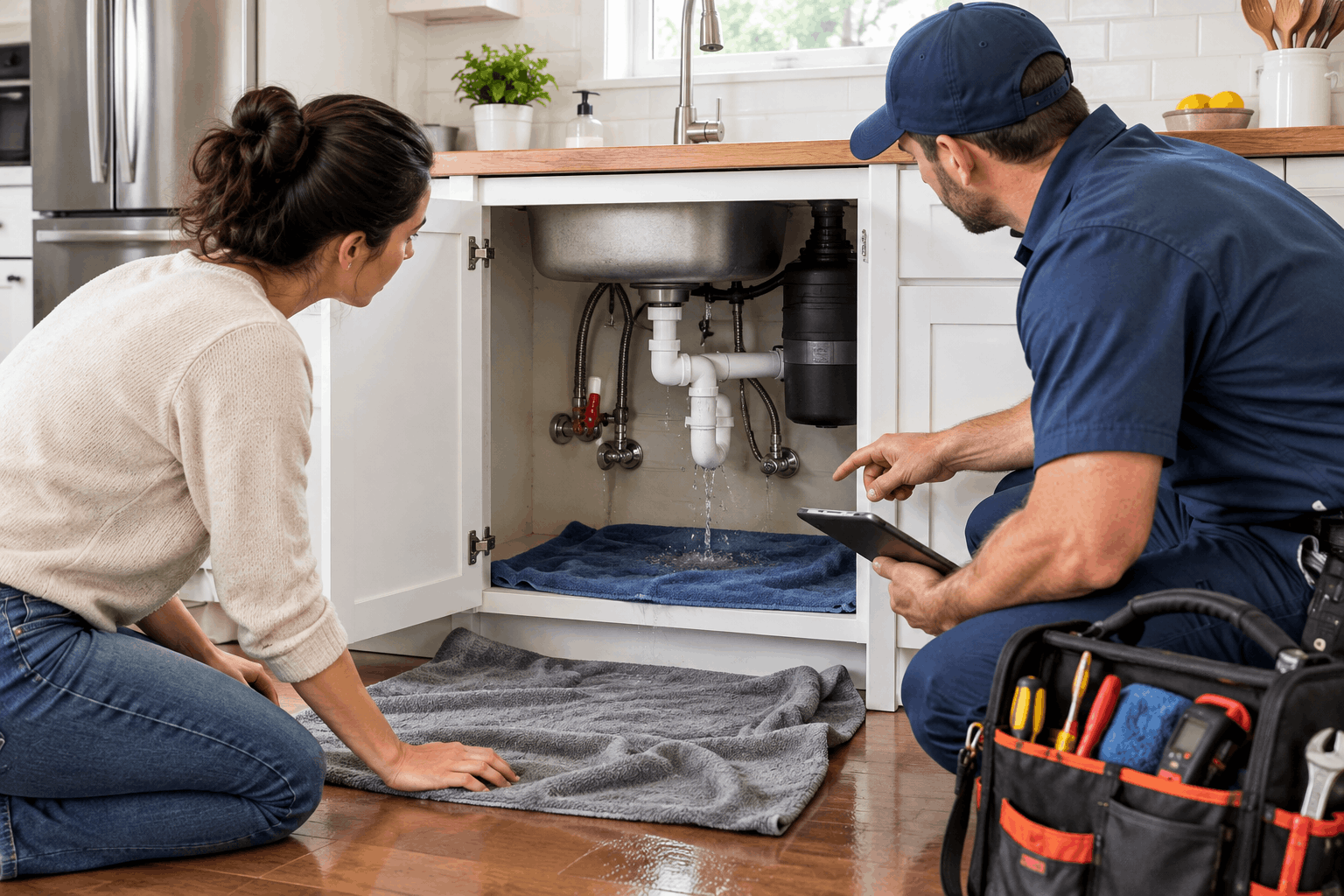
When you discover a water leak at home, the first priorities are to limit the flow of water when it is safe to do so, protect nearby belongings, keep water away from electrical equipment, and identify where the moisture appears to be coming from. After immediate damage-control steps, a plumber may need to diagnose and repair the actual cause.
A leak can range from a slow drip beneath a sink to water spreading rapidly across a room. Because the visible water does not always reveal the true source, it is useful to separate what you can safely do immediately from the work that requires professional plumbing expertise.
Water Leak at Home: What Should You Do First?
Start by assessing how quickly water is escaping and whether there are any immediate hazards.
If water is flowing actively and you know which accessible shut-off valve safely controls the affected fixture, closing it may help limit further leakage. For a larger plumbing problem, the property’s main water shut-off may be relevant if you know where it is and can access it safely.
Next, move vulnerable items away from the wet area where practical. Towels, containers, or other simple measures may help contain a minor leak temporarily.
However, these steps control the immediate situation. They do not repair the underlying fault.
Keep Water Away From Electrical Hazards
Water and electrical systems require particular caution.
If leaking water is close to sockets, electrical equipment, wiring, appliances, or another electrical source, avoid touching wet electrical items or entering standing water where an electrical hazard may be present.
Do not attempt to dismantle electrical equipment to investigate the situation.
Where there is a possible electrical risk, prioritize safety and seek appropriately qualified professional assistance.
Try to Identify Where the Water Appears
Once the immediate flow is under control, observe the affected area without dismantling plumbing components unnecessarily.
Useful details include:
- Where the water first became visible
- Whether the leak is continuous
- Whether it appears only when a tap or appliance is used
- How quickly water is accumulating
- Whether the area above or around the leak is also damp
- Whether staining or swelling was already present
- Whether the problem has happened before
These observations can help a plumber understand the situation before arriving.
Photos of visible moisture or damaged areas may also be useful when requesting service.
The Visible Leak May Not Be the Actual Source
Water can travel along surfaces, pipes, cabinets, ceilings, and building materials before becoming visible.
For example, moisture underneath a sink does not automatically mean the sink itself is damaged. The source could involve a supply connection, drain fitting, seal, hose, pipe, or another nearby component.
Similarly, a ceiling stain does not identify the exact location of the plumbing fault above it.
This is why guessing at the cause can be misleading. Describe what you observe and allow the source to be properly investigated.
When Does a Water Leak Need a Plumber?
A plumber is appropriate when the problem involves pipes, taps, drains, toilets, water heaters, plumbing connections, or other parts of the water system that require diagnosis or repair.
Professional attention becomes particularly important when:
- Water continues leaking after basic damage-control steps
- The source cannot be identified
- A pipe or connection appears damaged
- The leak repeatedly returns
- Moisture appears inside a wall or ceiling
- Water pressure changes unexpectedly
- A plumbing fixture cannot be isolated
- The problem is spreading to other parts of the property
After controlling the immediate situation, residents who need to find home repair professionals can use a multi-category service marketplace to connect the problem with an appropriate trade. For a plumbing leak, the important step is to describe the symptoms clearly so the request can be directed toward suitable professional help.
What Should You Tell the Plumber?
A clear service request can save unnecessary back-and-forth.
Instead of simply saying “I have a leak,” provide practical details.
For example:
“Water appears underneath the kitchen sink whenever the tap runs. I stopped using the tap, and the area remains damp.”
That description tells the plumber where the problem appears and what seems to trigger it without claiming to know the exact cause.
You can also mention when the leak started, whether you have isolated the water supply, whether the leak is getting worse, and whether there is visible damage nearby.
If the issue involves an appliance such as a washing machine or dishwasher, include that information as well.
What if the Leak Is Hidden?
Some water problems are not accompanied by an obvious dripping pipe.
Possible signs of hidden moisture can include unexplained damp patches, staining, peeling finishes, swelling around materials, or water appearing somewhere without an obvious nearby source.
These symptoms do not prove a particular plumbing fault, but they are reasons to investigate rather than repeatedly drying the area and ignoring it.
Avoid opening walls, floors, or technical components simply to search for the leak yourself. A professional can determine what inspection is appropriate based on the symptoms and property layout.
Can a Small Leak Wait?
A very minor drip may not have the same urgency as rapidly escaping water, but size alone should not determine whether a problem deserves attention.
Consider whether the leak is persistent, whether moisture is reaching materials that can be damaged, and whether the problem is becoming worse.
A small recurring leak can continue affecting cabinets, flooring, walls, sealants, or nearby fixtures even when each individual drip seems insignificant.
Temporary containment should therefore be treated as exactly that: temporary.
What About Leaks in Apartments?
Apartment water leaks can involve an additional consideration: the problem may affect another unit or relate to shared building infrastructure.
If water is appearing through a ceiling, entering from another area, or potentially spreading beyond your unit, notifying building or facilities management may be necessary in addition to arranging the appropriate repair.
Tenants should also follow relevant landlord or property-management procedures where required.
The objective is to identify who is responsible for the affected plumbing and prevent unnecessary delay while water continues causing damage.
Preventing Future Plumbing Problems
Not every leak can be predicted, but routine observation can help residents notice developing problems earlier.
Periodically look around accessible plumbing fixtures and connections for dripping, moisture, staining, corrosion, or other visible changes. Pay attention to drains that repeatedly become slow and fixtures that no longer operate normally.
If you notice a minor issue returning after a temporary fix, treat the recurrence as useful information. The underlying cause may still need attention.
Knowing where accessible water shut-off controls are located can also be helpful before an emergency occurs.
Control the Water First, Then Address the Cause
A water leak at home requires two separate responses: immediate damage control and proper repair.
First, limit the water safely where possible, protect the surrounding area, avoid electrical hazards, and document what is happening. Then determine whether the issue requires a plumber or another appropriate professional.
Do not assume that stopping visible water means the problem has been solved. The source may involve a fitting, pipe, fixture, appliance connection, or concealed plumbing component that still requires attention.
By acting quickly, describing the symptoms accurately, and directing the problem to the correct trade, homeowners can move from temporary containment toward a proper diagnosis and repair.