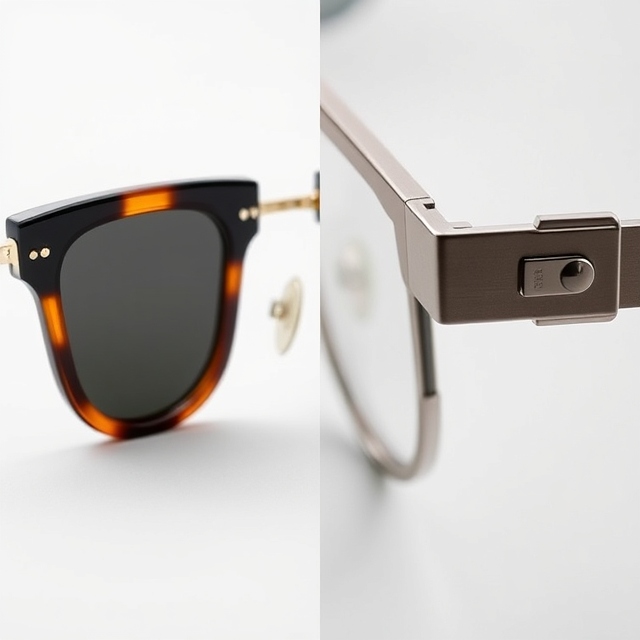
When comparing acetate vs metal sunglasses, the decision is about more than appearance. Frame material can influence the overall weight, visual character, construction, flexibility, and maintenance of a pair of sunglasses.
Acetate and metal are both widely used for eyewear, but they create noticeably different looks and wearing experiences. Understanding those differences can make it easier to choose frames that suit your style, face proportions, and everyday habits.
What Is Acetate in Sunglasses?
Acetate is a plant-based plastic material commonly used to make eyewear frames. It is known for its ability to support rich colors, patterns, and substantial frame shapes.
Unlike very thin molded plastic frames, quality acetate can have a distinctive layered appearance and a more substantial feel. Designers can also shape it into rounded, square, geometric, browline, and oversized silhouettes.
Acetate is especially useful when the frame itself is intended to become a noticeable part of an outfit.
Common characteristics include:
- Bold or substantial frame profiles
- Wide range of colors and patterns
- Smooth surface finishes
- Strong visual presence
- Compatibility with many classic and retro-inspired shapes
Because acetate can be produced in many visual treatments, it is often associated with expressive eyewear.
What Are Metal Sunglasses?
Metal sunglasses use metal alloys or other suitable metals as the primary frame material. They are commonly associated with thinner profiles, clean lines, and a lighter visual appearance.
Metal frames can work particularly well for people who prefer understated eyewear. However, metal does not automatically mean delicate or minimalist. Depending on the construction, metal frames can also have prominent bridges, decorative details, double bars, or larger lens shapes.
Typical characteristics include:
- Slim frame profiles
- Clean and structured lines
- Lightweight visual appearance
- Adjustable or detailed nose-bridge designs on some models
- Strong compatibility with aviator, pilot, geometric, and minimalist styles
The exact feel depends on the specific metal, construction, finish, and hardware used.
Acetate vs Metal Sunglasses: Key Differences
The easiest way to compare the two materials is to look at how they affect different aspects of eyewear.
| Feature | Acetate | Metal |
|---|---|---|
| Visual weight | Often bold and substantial | Often slim and understated |
| Color options | Extensive colors and patterns | Usually focused on finishes and tones |
| Frame profiles | Well suited to thick silhouettes | Well suited to thin structures |
| Style character | Expressive, classic, vintage-inspired | Minimal, refined, technical, or classic |
| Shape possibilities | Broad range | Broad range, especially structured designs |
| Maintenance | Generally straightforward but needs careful handling | May require attention to finish, hinges, and hardware |
These are general characteristics rather than strict rules. Modern eyewear designs can combine materials or use unusual construction techniques.
Which Material Looks More Vintage-Inspired?
Neither material is exclusively vintage. The overall silhouette, proportions, color, lens treatment, and design details usually have a greater effect on whether sunglasses feel retro.
Acetate can create a strong vintage impression because thicker frames were prominent in many classic eyewear styles. Tortoise patterns, warm neutrals, dark browns, and bold black frames can reinforce that effect.
Metal can also create a distinctly retro appearance. Pilot, aviator, wire-frame, and geometric designs can reference earlier periods while still fitting contemporary wardrobes.
For shoppers exploring different vintage-inspired sunglasses, it is useful to evaluate the complete design rather than choosing a material simply because it sounds more traditional.
Acetate Frames: When Do They Make Sense?
Acetate can be a good choice when you want the frame to have a strong visual presence.
For example, a person building an outfit around a statement accessory may prefer a thick square or oversized acetate frame. Someone looking for a softer retro appearance might choose a rounded acetate frame in tortoise or another warm pattern.
Acetate also provides considerable room for color experimentation. Transparent finishes, bold colors, layered patterns, and classic neutrals can all create different effects without changing the basic frame shape.
The downside is that a thick frame may feel visually heavier than a thin metal design. That is not necessarily a problem, but it is worth considering if you prefer understated eyewear.
Metal Frames: When Do They Make Sense?
Metal frames are useful when you want a more streamlined appearance.
A thin metal frame can complement outfits where the sunglasses should support the overall look rather than dominate it. Metallic finishes can also create a polished appearance without requiring a thick frame.
Pilot and aviator-inspired sunglasses are particularly associated with metal construction, although similar shapes are also available in other materials.
For everyday use, consider the entire construction rather than the material alone. Nose pads, bridge design, hinge quality, temple shape, and finish can all influence comfort and durability.
Does Frame Material Affect Comfort?
Yes, but material is only one part of comfort.
A pair of sunglasses can feel comfortable or uncomfortable depending on its overall dimensions, weight distribution, bridge design, temple length, and fit.
A thick acetate frame may have more noticeable visual and physical presence, while a thin metal frame may feel less substantial. However, a well-designed acetate frame can still be comfortable, just as a poorly fitted metal frame can become irritating.
That is why shoppers should consider frame measurements alongside material.
Acetate and Metal Are Not the Only Options
Modern eyewear does not always require choosing between a completely acetate frame and a completely metal frame.
Some sunglasses combine materials to create a different balance of structure and visual character. An acetate front paired with metal details, for example, can combine a more substantial frame appearance with contrasting hardware.
Other designs may use titanium or specialized material combinations where the construction calls for particular characteristics.
This means material should be viewed as one part of the design rather than the entire identity of the sunglasses.
How Should You Choose Between Acetate and Metal?
Start with the appearance you want.
If you prefer bold, expressive, or substantial eyewear, acetate may be worth exploring. It works particularly well with strong colors, thick rims, and statement silhouettes.
If you prefer slim, clean, or understated eyewear, metal may be a better starting point. It can create a refined appearance while allowing the lens shape and bridge to provide visual interest.
Then consider practical factors such as fit, frame width, nose comfort, intended use, and how the sunglasses coordinate with your existing wardrobe.
Ultimately, the best choice in the acetate vs metal sunglasses comparison depends on the complete frame design. Material matters, but shape, proportions, construction, and personal style determine how a pair actually looks and feels when worn.